Notes / Pune
Best International Schools in Pune: The 2026 Guide for Families
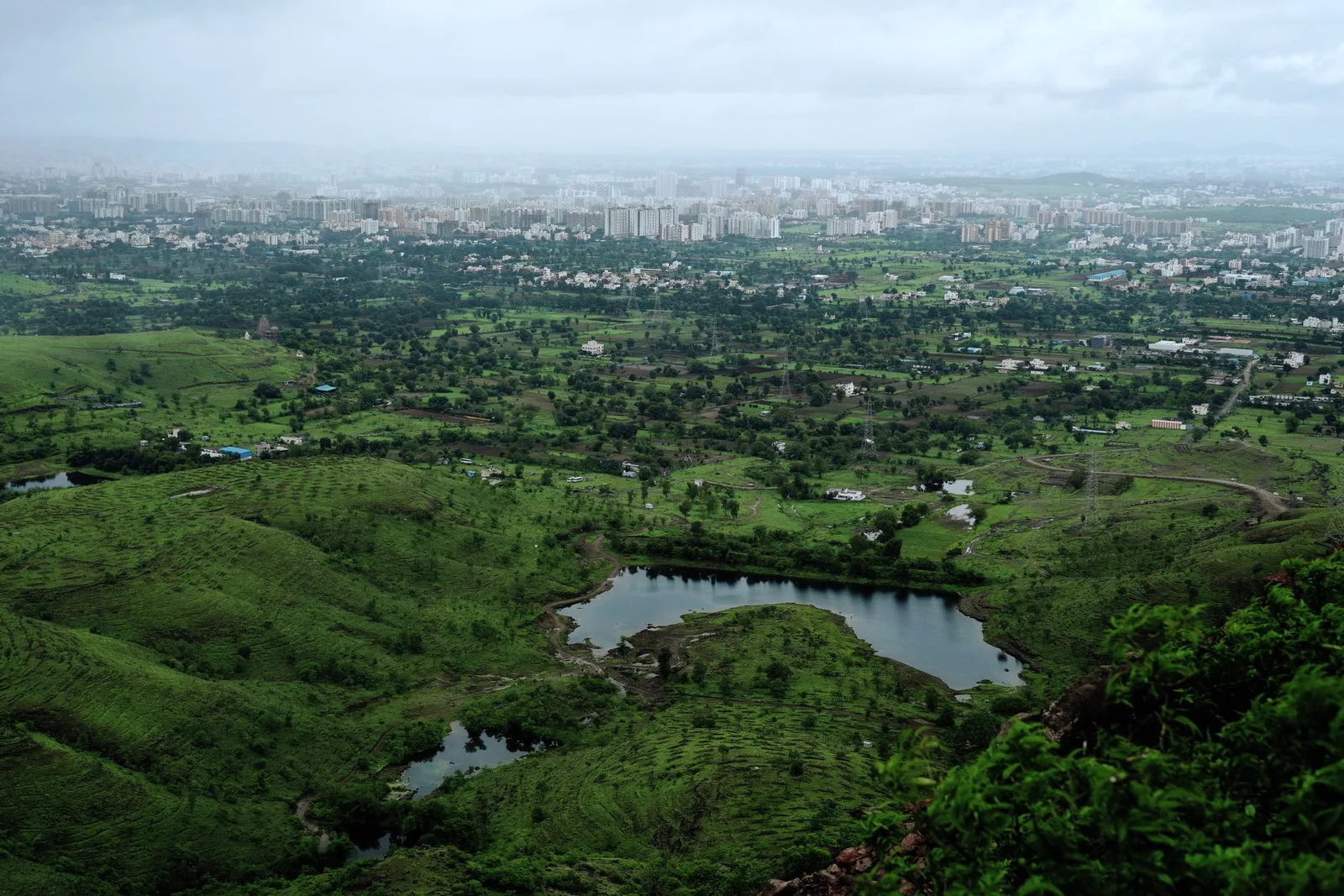
Pune has more genuine IB and Cambridge schools than its smaller-metro reputation suggests, anchored by India's oldest IB-continuum school and a new premium British entrant, but the field is spread across a wide, traffic-bound city. This guide covers the schools that actually run international curricula, where families live, and the practical things that catch new arrivals out.
Comparison table
| School | Curriculum | Ages | Fees range (USD) | Notes |
|---|---|---|---|---|
| Mahindra International School (MIS) | IB | 3–18 | 4,263–13,641 | Hinjewadi; India's oldest full-IB-continuum school, expat-heavy |
| Indus International School | IB | 4–18 | 2,275–8,862 | Bhukum; full IB continuum with boarding |
| MIT Vishwashanti Gurukul World School | IB | 3–18 | 5,988–14,371 | Loni Kalbhor; full IB, boarding, vegetarian gurukul ethos |
| Symbiosis International School | IB, Cambridge | 3–18 | 1,880–9,222 | Viman Nagar; full IB plus IGCSE bridge, near airport |
| Wellington College International Pune | British, IB | 2–18 | 18,982–23,413 | Kharadi; premium British brand into IB Diploma, the priciest |
| Victorious Kidss Educares | IB | 2–18 | 2,418–10,419 | Kharadi; long-established full IB continuum |
| RIMS International School and Junior College | Cambridge | 3–18 | Not published | Kondhwa; Pune's oldest Cambridge school |
| DLRC School | Cambridge | 3–18 | 2,138–3,413 | Sus-Baner; experiential learning farm into Cambridge |
| Daffodil International School | Cambridge | 3–18 | 862–1,437 | Baner; small Cambridge-only, affordable |
| Finland International School | Finnish, Cambridge, IB | 3–14 | 2,874–7,808 | Kalyani Nagar; India's first Finnish curriculum |
| Boston World School | Cambridge | 3–18 | 754–2,515 | Undri; budget Cambridge, same group as RIMS |
| St. Mary's School | IB, Indian (ICSE) | 3–18 | 2,012–2,994 | Camp; 1866 heritage school with IB Diploma stream |
| Universal Wisdom School | IB, Cambridge | 3–18 | 4,910–8,623 | Balewadi; IB PYP plus Cambridge, DP at candidate status |
| Chatrabhuj Narsee School | Cambridge, IB | 3–18 | 3,551–4,240 | Hadapsar; new Cambridge plus IB Diploma campus |
| Elpro International School | Indian (CBSE), Cambridge, IB | 3–18 | 2,510–3,319 | Chinchwad; large multi-board, CBSE core |
| BLISS International School | IB | 3–18 | from 1,629 | Hinjawadi; young IB continuum in the IT park |
| C P Goenka International School Pune | Cambridge, Indian (CBSE) | 3–18 | 1,686–3,123 | Wagholi; mid-market Cambridge plus CBSE |
| Bharati Vidyapeeth Rabindranath Tagore School of Excellence | Cambridge | 3–18 | 1,198–2,994 | Baner; Cambridge pathway, large local trust |
| Billabong High International School Pune Hadapsar | Cambridge, Indian (CBSE) | 3–18 | 1,078–2,455 | Hadapsar; CBSE-first with Cambridge stream |
| Crimson Anisha Global School | Indian (CBSE), Cambridge | 3–18 | 1,189–1,976 | Mohammed Wadi; dual-board CBSE and Cambridge |
| Podar International School - Pune (Wakad) | Indian (CBSE), Cambridge | 3–16 | 778–982 | Wakad; CBSE plus Cambridge to IGCSE |
| Oysters International School | Cambridge | 3–16 | 551–659 | Mohammed Wadi; affordable Cambridge to IGCSE |
Fees converted to USD at indicative June 2026 rate of INR 83.5 = USD 1. Verify current figures with each school.
The brief
- Pune's international field is deeper than Chennai's and more IB-led, anchored by Mahindra International School (MIS), India's oldest full-IB-continuum school and its first CIS-accredited one, in Hinjewadi.
- The genuine top tier is almost all full IB: MIS, Indus, MIT Vishwashanti Gurukul, Symbiosis and Victorious Kidss run the whole PYP-MYP-DP continuum, several with boarding. Wellington College International, opened in 2023, runs a British pathway into the IB Diploma at by far the highest fees in the city.
- Below them, a wide Cambridge field covers most budgets, from RIMS, the city's oldest, through DLRC, Daffodil, Boston World and Finland International, the last running India's first Finnish curriculum.
- Fees stretch further than any other Indian metro on this site: roughly INR 50,000 to 20 lakh a year (about USD 600 to 23,400), from budget Cambridge day schools to Wellington's premium British brand.
- International families cluster in two arcs: the eastern social belt of Koregaon Park, Kalyani Nagar and Viman Nagar near the airport, and the Baner-Balewadi-Aundh corridor in the north-west near the IT parks. The schools and the IT jobs both pull east and west of the old city.
- Pune is milder and drier than Mumbai, sitting at altitude on the Deccan plateau with a June-to-September monsoon rather than Mumbai's deluge, which is part of why families pick it over the coast.
The schools at the top
Pune's international market is led by a cluster of full-IB schools rather than a single embassy school, which is the main way it differs from Chennai or smaller Indian metros. Several run the entire International Baccalaureate continuum from the early years through the Diploma, several offer boarding, and one carries a long expatriate history that predates the rest of the field by years. The gap to the second tier is real but narrower than in cities with one dominant school, so the choice at the top is genuinely a comparison rather than a default.
Mahindra International School (MIS)
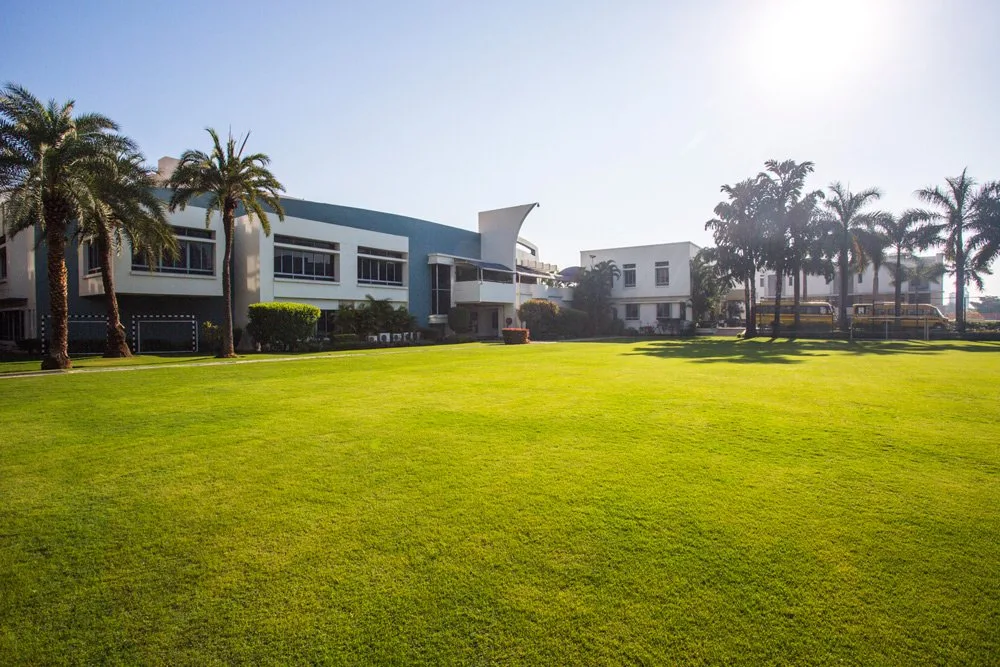
Zone: Hinjewadi (Rajiv Gandhi Infotech Park, west) Curriculum: Full IB continuum (PYP, MYP, Diploma) Ages: 3 to 18 Fees: INR 3,56,000 to 11,39,000 / yr, banded by nationality and grade (2025-26)
MIS is the closest thing Pune has to a settled expatriate school and the obvious first call for relocating and globally mobile families. It opened in 1998 as Mercedes-Benz International School and took the Mahindra name in 2019 under the KC Mahindra Educational Trust. It was the first school in India authorised for the full IB continuum and the first in the country to gain Council of International Schools accreditation, both genuine firsts rather than marketing. The roughly 387 students come from around 32 nationalities, with an expatriate share above half and faculty drawn from sixteen countries, which is an unusually international cohort for Pune. Diploma cohorts are small, twenty to thirty candidates a year, and average in the low-to-mid thirties, above the global mean.
Note: Tuition is the central consideration. Fees run high and are banded by nationality and grade, with a substantial one-time admission charge on top. Long-standing IB families value the diversity and the small, settled secondary cohorts; the recurring hesitation is whether the premium fees match what lands day to day. The Hinjewadi address suits families working the western IT corridor and is a real commute from the eastern neighbourhoods.
Indus International School
Zone: Bhukum, Mulshi (rural west, off the city) Curriculum: Full IB continuum (PYP, MYP, Diploma, Career-related Programme) Ages: 4 to 18 Fees: INR 1,90,000 to 7,40,000 / yr (2025-26), before boarding
Indus is a large full-IB day-and-boarding campus on a 36-acre green site at Bhukum, west of central Pune, run by the Indus Trust. It carries the entire IB continuum for roughly 1,100 students from Reception to Year 13, with weekday and full boarding alongside day places, which makes it one of the few schools in the region offering an internationally benchmarked path with a residential option inside India. The draw is breadth: a green out-of-city campus, strong sports and arts provision, a sizeable boarding community, and a track record of Diploma results and overseas university placement.
Note: Families who have stayed the course speak warmly about the teaching, with staff described as patient and available and good university-placement support for children moving in from other systems. The harder notes are about consistency rather than care, with some parents questioning whether the academic execution justifies the fees, and a workplace where people and plans change often. The rural setting means a real daily commute for day families living in the city, so this is a school chosen for the campus and the boarding, not for proximity.
MIT Vishwashanti Gurukul World School
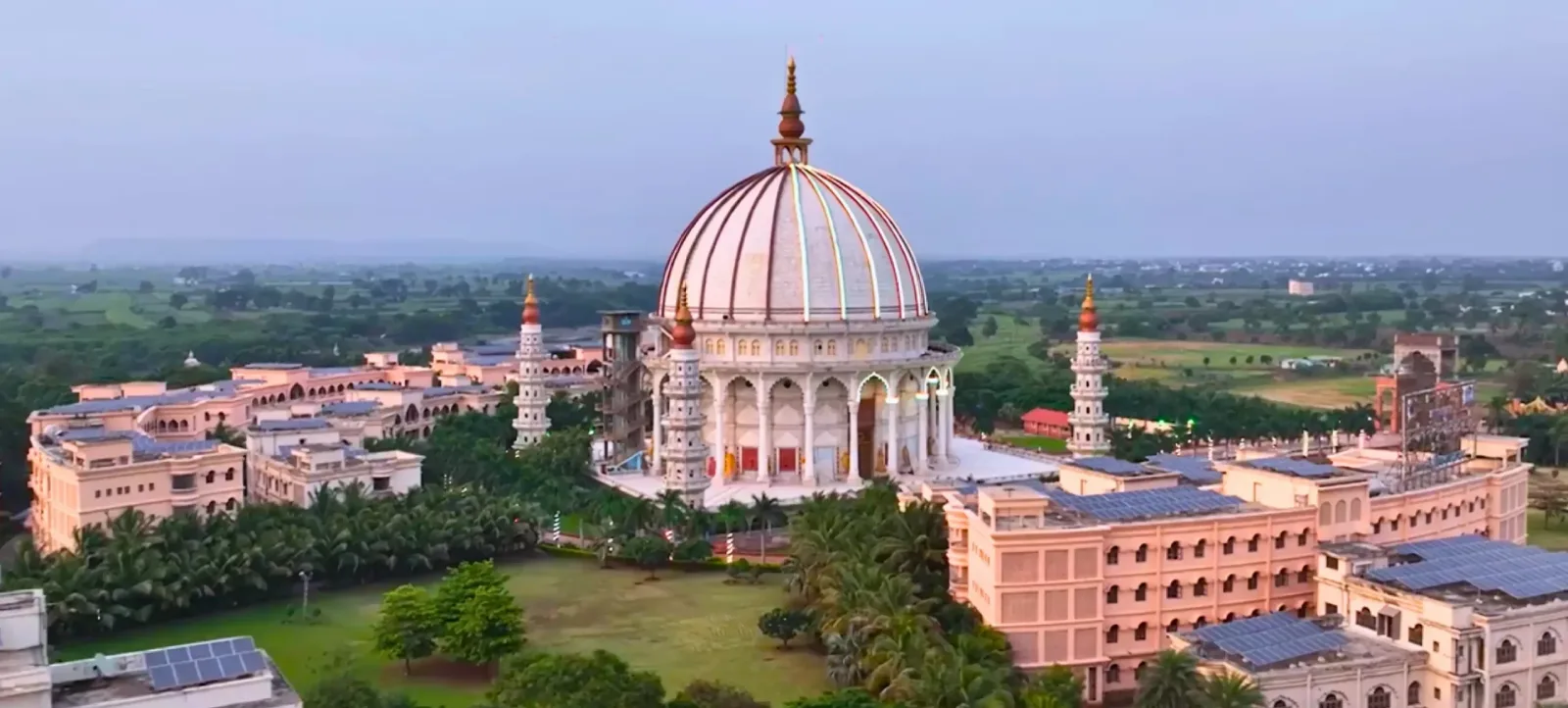
Zone: Loni Kalbhor (south-east, off the city) Curriculum: Full IB continuum (PYP, MYP, Diploma) Ages: 3 to 18 Fees: INR 5,00,000 to 12,00,000 / yr, day to boarding (2025-26)
MIT Vishwashanti Gurukul is a large IB day-and-boarding campus that wraps the full continuum in an explicitly Indian, values-led frame. It opened in 2006 as the international arm of Pune's MAEER's MIT group, on a 125-acre site at Loni Kalbhor south-east of the city, and runs the authorised PYP, MYP and Diploma from nursery to Grade 12. Around 600 pupils from many nationalities sit on the IB campus, which is distinct from the group's CBSE schools that share the Vishwashanti Gurukul name. Day places sit alongside separate residential houses for boys and girls.
Note: The positioning leans on a gurukul-inspired character, finishing-school and leadership strands, vegetarian dining and strong sports and arts infrastructure. Parents most often credit the manners-and-confidence strand, saying they notice the change at home within a year. The residential and dining model is firmly traditional and vegetarian-only across the refectory, which suits some families and not others. The pool of detailed feedback is small and skews positive, with a quieter undercurrent that a school this large can feel institutional and that management is the part people most want sharper. Fees run roughly INR 5 to 8 lakh for day pupils and 8 to 12 lakh for boarders, among the higher-priced options in the region.
Symbiosis International School
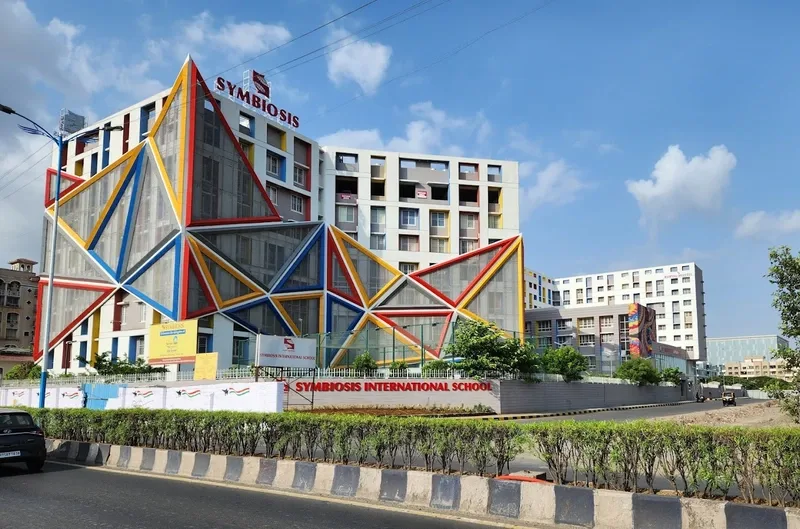
Zone: Viman Nagar (east, near the airport) Curriculum: Full IB continuum (PYP, MYP, Diploma) with Cambridge IGCSE bridging Grades 9 and 10 Ages: 3 to 18 Fees: INR 1,57,000 to 7,70,000 / yr (2025-26)
Symbiosis is an established east-Pune day school running the full IB continuum with a Cambridge IGCSE bridge, which is the best-placed top-tier school for families living in the eastern neighbourhoods. It opened in 2005 under the Symbiosis Society and has been an IB World School since 2006, carrying the four IB programmes from Early Years through to the Diploma, with Cambridge IGCSE in Grades 9 and 10. The Ishanya campus near the airport offers an auditorium, sports facilities and a settled, well-resourced setting. The 2025 cohort averaged 33 points at IB Diploma and 79 percent at IGCSE, mid-range outcomes for a city with several international options.
Note: Parents rate the school well on infrastructure and the spread of programmes, with the sharper notes landing on how the place is run rather than what it teaches. The breadth from Early Years to Diploma and the campus itself draw steady approval; the friction sits around staff consistency, day-to-day management and the fee level relative to what families feel they get back. Tuition climbs from around 1.6 to 2 lakh in the early years to 4.4 to 4.7 lakh through primary and secondary and 7.7 lakh at Diploma, with admission and registration charges on top.
Wellington College International Pune
Zone: Kharadi (east IT corridor, riverside) Curriculum: English Early Years and National Curriculum, Cambridge IGCSE, then IB Diploma Ages: 2 to 18 Fees: INR 15,85,000 to 19,55,000 / yr (2025-26), the highest in the city
Wellington College International is the newest and by far the most expensive entry in the Pune field, a 2023 campus carrying the Wellington College name. It sits on a purpose-built riverside site at Kharadi, operated through a partnership between the Unison Group and Wellington College in the UK, and led by founding master Dr Murray Tod. It teaches the English Early Years framework and National Curriculum, takes pupils through Cambridge IGCSE in the senior years, and finishes on the IB Diploma, with COBIS accredited membership secured in early 2025 and IB World School status for the Diploma.
Note: The positioning leans on Wellington's English-school ethos of pastoral care, leadership and a broad co-curricular and sports programme, set in expensive new facilities. The draw is brand, breadth and infrastructure for a globally minded family. The cautions are a young school still building a track record from a 2023 start, and tuition at the top of the Pune market, rising into the high teens in lakhs per year by upper primary. The Wellington name belongs to the operating partnership; quality at a new campus is built locally, not transferred from the UK school.
Victorious Kidss Educares

Zone: Kharadi (east IT corridor) Curriculum: Full IB continuum (PYP, MYP, Diploma) Ages: 2 to 18 Fees: INR 2,01,870 to 8,70,003 / yr (2025-26)
Victorious Kidss Educares is one of Pune's longer-established IB World Schools, running the full continuum from playgroup through Grade 12 on a Kharadi campus. It was founded in 1997 by Dr Robbin Ghosh and is now led by principal Saarada Ghosh, with around 1,200 students and a Vedanta-inflected ethos layered over the IB framework. English is the main language of instruction, with Hindi and French offered. It positions itself toward families committed to the IB pathway across the whole age range rather than those wanting a national-board fallback.
Note: Families who stay tend to like the classroom side, with teachers who give detailed, regular feedback and an IB programme delivered with some care. The recurring friction sits above the classroom, in how the place is run, with a record of leadership turnover and operational friction behind the polished marketing. Tuition runs from roughly INR 2 lakh in the early years to about 8.7 lakh at Diploma, in Pune's upper fee bracket before transport, meals and uniform. The Kharadi location suits families working the eastern IT corridor.
The Cambridge field
Below the IB-led top tier, Pune has a broad spread of Cambridge schools covering most budgets, from the city's oldest international school to budget day campuses and one genuine curriculum outlier. These admit on the open market, price well below the premium IB names, and suit families who want an English-medium international qualification without IB fees or boarding. The quality varies more here than at the top, so the comparison is school by school rather than tier by tier.
RIMS International School and Junior College
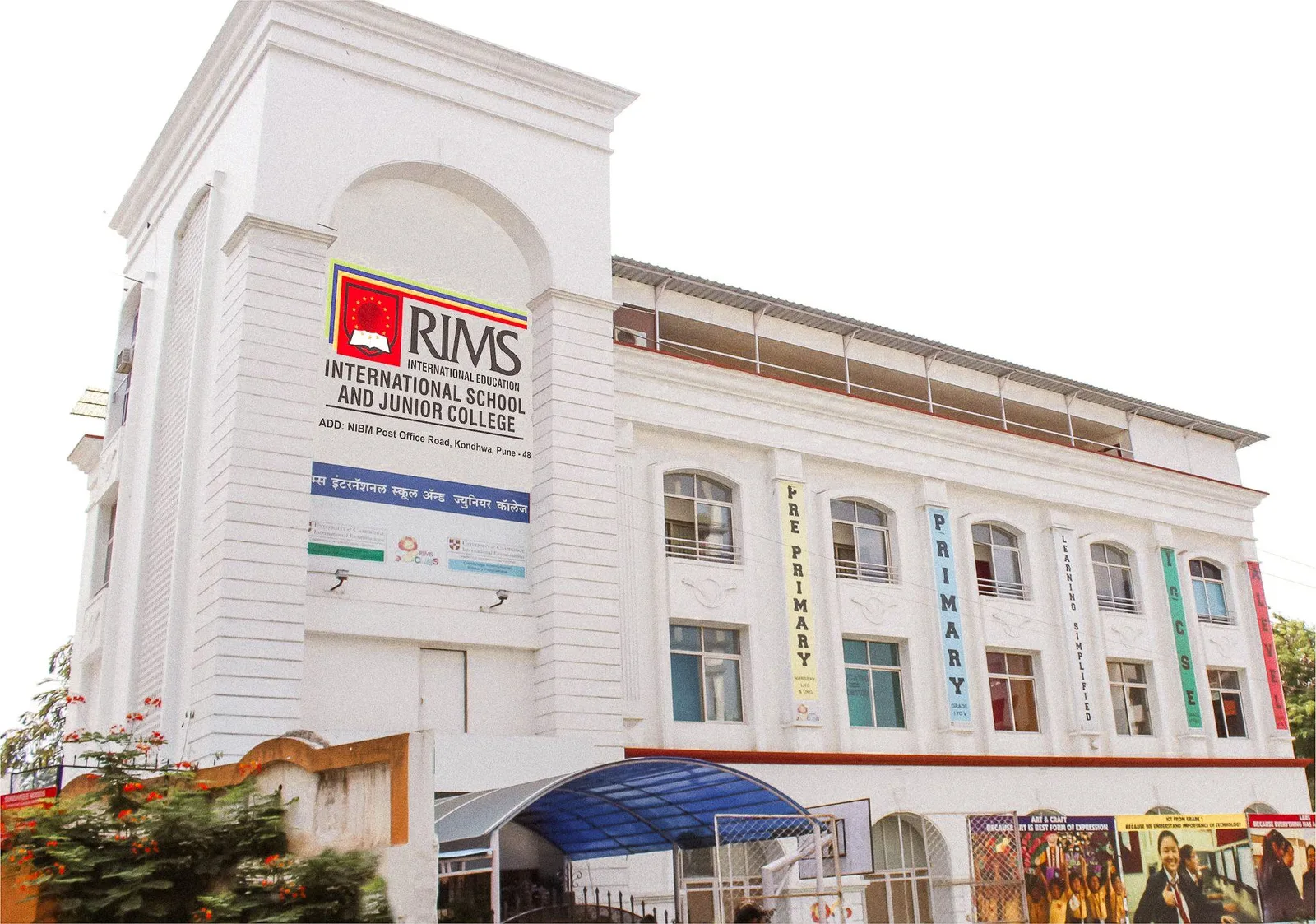
Zone: Kondhwa (south-east, NIBM belt) Curriculum: Full Cambridge pathway (Primary through IGCSE and AS and A Level) Ages: 3 to 18 Fees: Not published; confirm with admissions
RIMS is Pune's oldest international school, opening in Kondhwa in 2004 as the city's first international school and junior college and among the first in Pune to deliver Cambridge IGCSE and A Level, from 2005. It remains one of Cambridge's longest-standing India partners, running a single Cambridge route from early years through to Cambridge Advanced with no Indian board or IB stream alongside it. The school is owner-operated by the Rais family, with Fahim Rais as managing director, and positions itself on continuity, modest class sizes and individual attention rather than facilities or breadth.
Note: Parents describe a small, settled school where children get noticed, and most credit a recent change of principal with tightening academics and administration after a wobblier patch. The praise clusters on experienced, caring teachers and personal attention in modest-sized classes; the friction clusters on money and add-ons rather than teaching. Families expecting expansive sports and extracurricular infrastructure, or fully transparent published costs, should weigh that against the smaller footprint.
DLRC School
Zone: Sus-Baner hills (north-west) Curriculum: Experiential primary into Cambridge IGCSE and AS and A Level Ages: 3 to 18 Fees: INR 1,78,500 to 2,85,000 / yr (2025-26)
DLRC is a small experiential learning farm in the Sus-Baner hills that channels its students toward Cambridge exams, suited to families who want progressive primary years over a conventional board. It opened in 2015 when Mona and Ajay Dalmia and Pavan Iyengar began coaching their own daughter for Cambridge IGCSE in a rented bungalow, and has since grown to roughly 300 students on a mango-farm campus, with mixed-age classrooms, a low facilitator ratio, and a head-heart-hand philosophy built around gardens, design labs and social-impact projects. Children learn through an in-house experiential and inquiry programme up to Grade 8, then move onto Cambridge IGCSE in Grades 9 and 10 and AS and A Level in Grades 11 and 12.
Note: Families drawn to DLRC tend to love the unconventional, outdoors-first texture of the place, with children growing food, running projects and learning across age groups rather than in rows of desks. The friction shows up around structure and management rather than the experience itself, and the shift from an in-house early-years programme to formal Cambridge exams in the senior years is the part parents most often weigh. Composite fees run from about INR 178,500 in the early years to 285,000 in the senior grades, before transport, trips and exam costs.
Daffodil International School
Zone: Baner (north-west) Curriculum: Full Cambridge pathway (Primary through IGCSE and AS and A Level) Ages: 3 to 18 Fees: INR 72,000 to 1,20,000 / yr (2025-26)
Daffodil is a small, long-established Cambridge-only school in Baner, among the older dedicated Cambridge schools in the city. It opened in 2006 and runs the complete Cambridge route from playgroup through AS and A Level, with IGCSE in between. It is a self-financing day school of around 212 pupils on a compact site behind D-Mart in Laxman Nagar, with separate buildings for primary and senior sections and individual Physics, Chemistry and Biology labs. The intimate roll keeps class sizes low and teacher contact close, which is the main draw.
Note: Fees sit well below the city's premium international campuses, roughly INR 72,000 to 120,000 a year across grades on published monthly rates, which makes this one of the more affordable genuine Cambridge pathways in the north-west. Set against that small scale are limited outdoor space and a thinner extracurricular and facilities offer than larger competitors. Cambridge is the only board on offer, so families wanting IB or an Indian-board fallback look elsewhere.
Finland International School
Zone: Kalyani Nagar (east, near the airport) Curriculum: Finnish National Core Curriculum, with Cambridge IGCSE and IB Diploma layered on Ages: 3 to 14, growing toward Grade 12 Fees: INR 2,40,000 to 6,52,000 / yr (2025-26)
Finland International is India's first Finnish-curriculum school, a genuine curriculum outlier in the Pune field. It opened in Kalyani Nagar in 2022, launched by Goenka Global Education with EduCluster Finland, and is the first in India to teach the Finnish National Core Curriculum. It started with nursery to Grade 4 and is growing year by year toward a full kindergarten-to-Grade-12 model, with a Cambridge IGCSE and IB pathway layered on so older students leave with both a Finnish and an international qualification. Around seventy percent of teaching staff were recruited from Finland at launch, with Indian teachers trained in the same methods.
Note: The approach leans on phenomenon-based, play-led learning and child well-being rather than early academic pressure, which positions it squarely for parents who actively want the Finnish model rather than a conventional exam track. English is the language of instruction, with Hindi and Marathi available. Its newness, the gradual grade rollout, and the cost premium are the main things to weigh, since families enrolling now are backing a school still building out its senior years. The Kalyani Nagar address sits in the eastern social belt where many international families live.
finlandinternationalschool.com
Boston World School
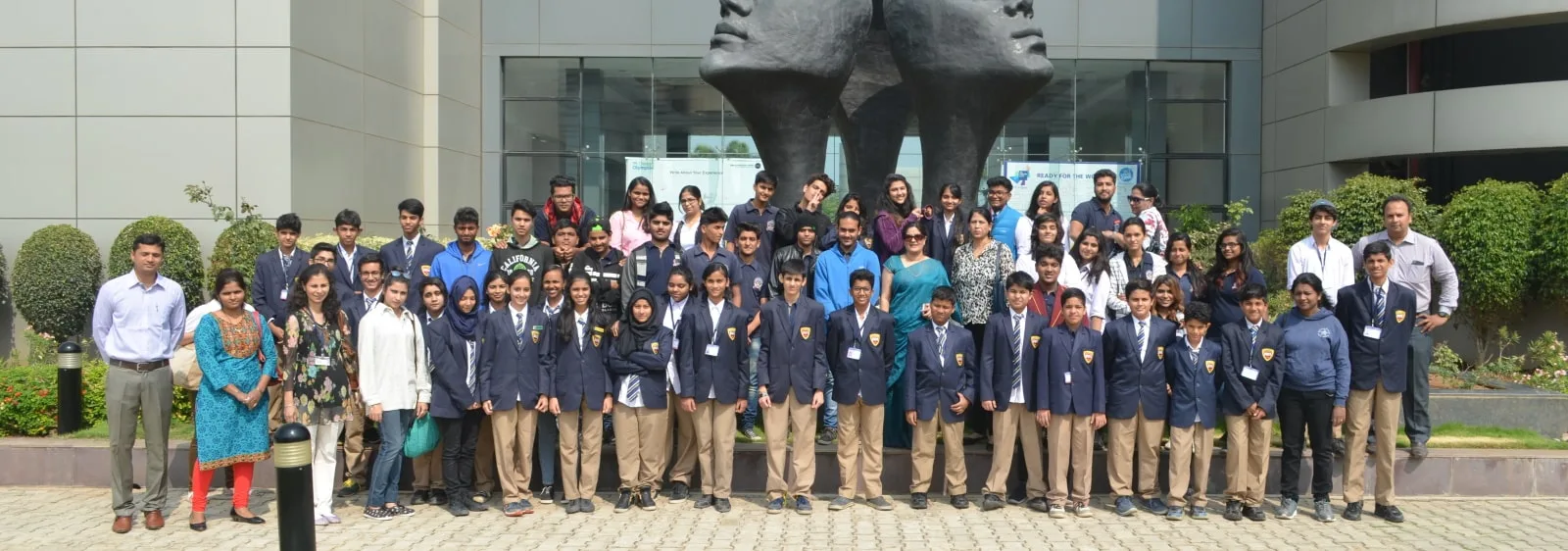
Zone: Undri (south-east, NIBM Annex) Curriculum: Full Cambridge pathway (Nursery through IGCSE and A Level) Ages: 3 to 18 Fees: INR 63,000 to 2,10,000 / yr (2025-26)
Boston World School is a budget-positioned Cambridge school in Undri, run by the Rais group behind RIMS. It delivers the full Cambridge pathway from Nursery through IGCSE and A Level on its NIBM Annex campus, with University of Cambridge centre status and Ofqual recognition. It markets a route to a UK-style qualification at a modest budget, and the fees back that up: roughly INR 63,000 a year in the early years rising to about 2,10,000 in Classes 11 and 12, well below Pune's premium international tier. It shares leadership and curriculum lineage with RIMS in Kondhwa rather than operating independently.
Note: Written parent accounts split sharply. The Cambridge structure, a clutch of named dedicated teachers and on-campus safety draw genuine praise, but a louder strand describes a school that feels run as a business first, with staff who change often and management that parents find hard to reach. Day numbers, the current campus principal and a settled founding year are not cleanly documented, and the school is young enough that an established track record is still forming. It suits families wanting an English-medium Cambridge stream in the NIBM and Undri belt without IB or boarding fees.
Newer, mid-market and dual-board options
A wide second group is worth a visit for families whose priority is a particular neighbourhood, a dual-board option, or a mid-market fee. Several pair an international stream with CBSE on the same campus, several are young and still scaling, and several draw a largely local rather than expatriate cohort. The international label is genuine at most, but the depth of senior-school results is the open question at the newer ones, so families are often buying into an institution that is filling out year by year.
St. Mary's School
A heritage academic school in Camp, founded in 1866 for the daughters of British Army officers and run for decades by an Anglican order before passing to a lay administration. It teaches ICSE through Class 10 and ISC for Junior College, and was authorised as an IB World School delivering the Diploma across Grades 11 and 12, giving senior students a route out of the national-board track. The ethos is overtly Christian and traditional, and the academic record is strong, with ICSE and ISC results that regularly produce city and national rank-holders. The reputation rests on results and long-serving staff; the reservations cluster around how traditional and tightly run it feels day to day. Published ICSE-side tuition runs roughly INR 1,68,000 to 2,50,000; IB Diploma fees are quoted on application.
Universal Wisdom School
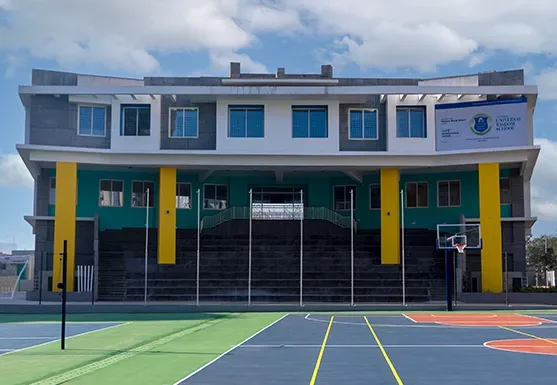
A young, premium international school in Balewadi pairing IB primary years with a Cambridge upper school. It opened for the 2022-23 year under the Wisdom World Schools banner, is an authorised IB World School for the Primary Years Programme, and delivers Cambridge IGCSE with AS and A Levels for senior grades; the IB Diploma sits at candidate status rather than full authorisation, which families weighing a route to Grade 12 should confirm. The campus is led by principal Ana Dominguez, who brought a long international teaching background across Spain, the Middle East and China. Annual tuition runs from roughly INR 410,000 in the early years to 720,000 by middle school, among the higher-fee options in the Baner-Balewadi belt. It suits families wanting an international pathway close to the Mumbai-Bengaluru highway and willing to back a school still building out its upper grades.
Chatrabhuj Narsee School
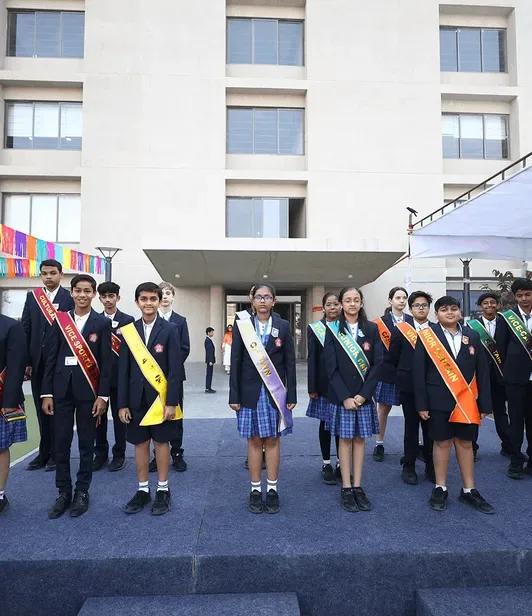
A young, well-resourced Cambridge and IB campus of a Mumbai school group, on a large new site in Amanora Park Town, Hadapsar. It opened for 2022-23, extending the Mumbai-founded CNS group into eastern Pune on a 6.5-acre site with an auditorium and swimming pool inaugurated in 2023. It runs the Cambridge pathway from early years through IGCSE alongside the IB Diploma for senior secondary, positioning itself as a full international-curriculum option rather than a national-board school. Being only a few years old, its track record is still forming, and leadership has turned over more than once since opening, so families weighing continuity will find the senior years less settled than the well-equipped facilities suggest. Front-of-house staff and class teachers draw consistent praise; the running of the branch and its turnover behind the scenes draw the doubts. Fees run roughly INR 2,96,500 to 3,54,000.
Elpro International School
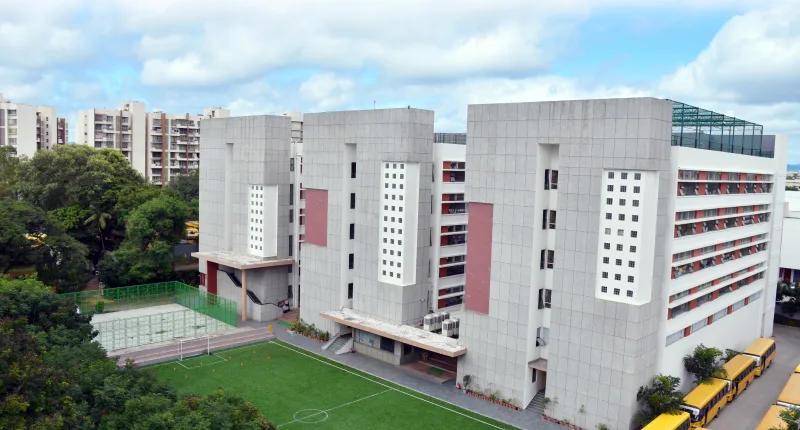
A large, multi-curriculum day school in Chinchwad that runs Indian and international tracks side by side. It opened in 2011 and has grown into one of Pimpri-Chinchwad's biggest campuses, with roughly 5,800 students from pre-nursery to Grade 12. It carries CBSE as its core board alongside Cambridge IGCSE and the IB Diploma and Career-related Programmes, an unusually wide spread for the area, and draws families from Chinchwad, Wakad and Ravet. The international streams sit on top of a school that is fundamentally a domestic-board institution. Family feedback splits from the brochure: parents praise the buildings, labs and breadth of programmes, then question what happens inside them, with a recurring sense that fees buy facilities more than teaching. Annual tuition runs from about INR 2.1 lakh in the primary years to roughly 2.8 lakh for senior science.
BLISS International School
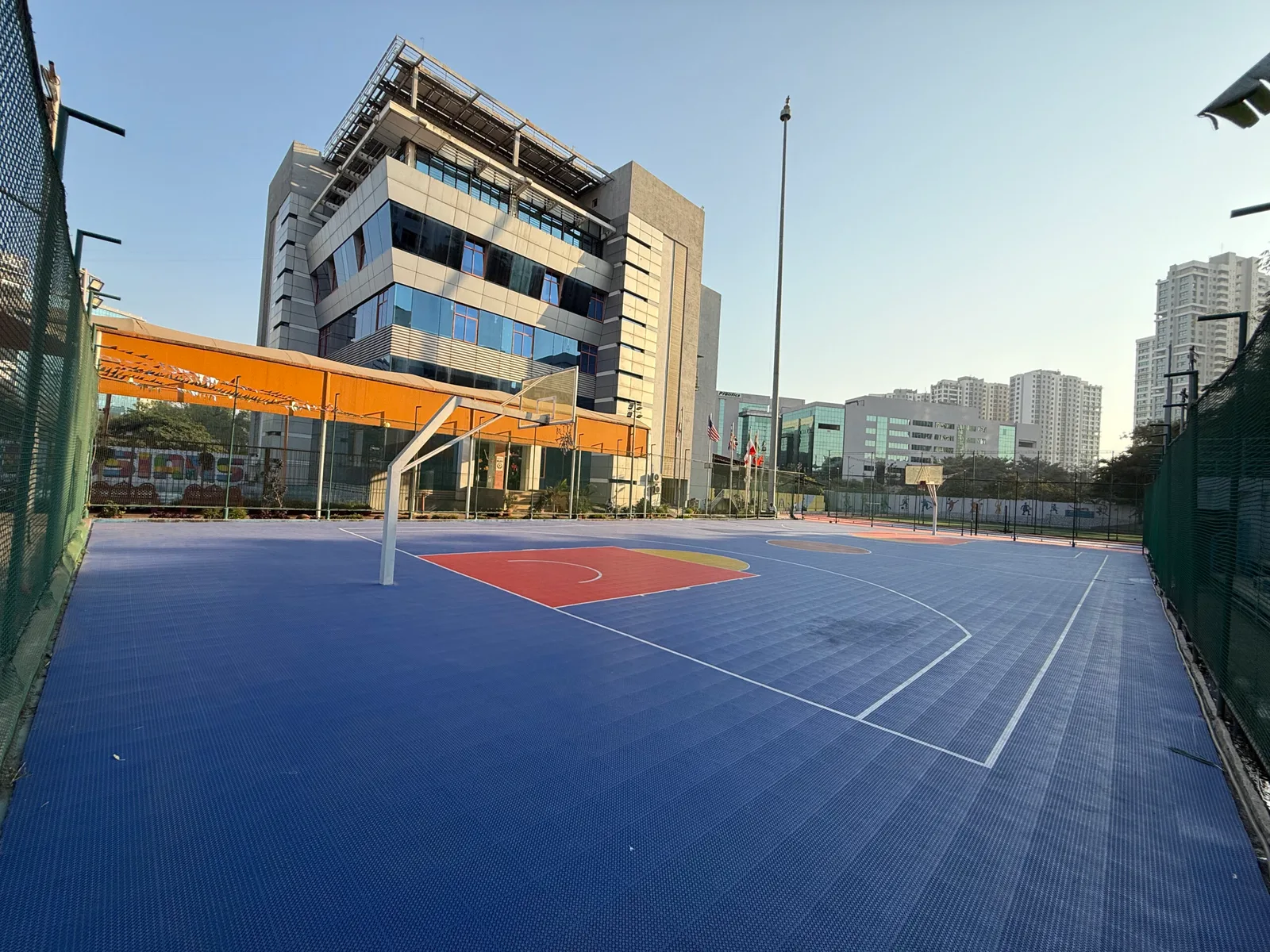
A young IB-continuum school in Hinjawadi built for families inside the western IT corridor who want a single Foundation-to-Diploma pathway. It opened in 2018 as the first school of the Budhrani Knowledge Foundation, in Phase 1 of the Rajiv Gandhi Infotech Park, and runs the IB Primary Years, Middle Years and Diploma programmes alongside an early-years Foundation stage, with founding head Ms. Sheeza A.K bringing a background as an IB examiner and workshop leader. The location places it within reach of the Hinjawadi tech workforce. As a campus still building out its senior years and its first Diploma cohorts, it suits families comfortable backing a newer IB school rather than one with an established results record. Published fees cover the nursery stages only, from about INR 1,36,000; tuition beyond the early years is best confirmed directly.
C P Goenka International School Pune
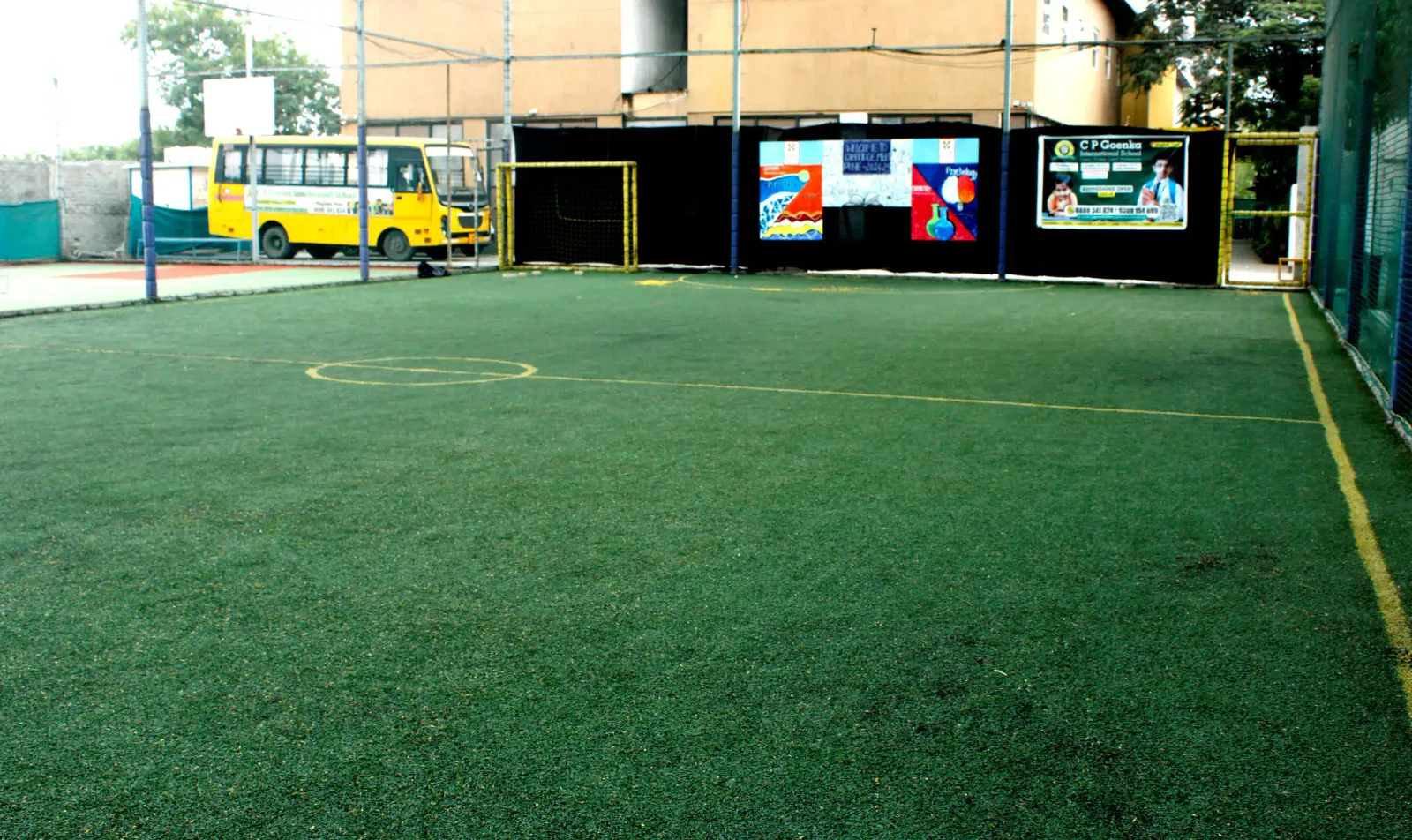
A mid-market Wagholi day school running Cambridge IGCSE and CBSE under the Mumbai-based C P Goenka group. It opened in 2012 as the group's first campus beyond the Mumbai region, behind the Nagar Road corridor, and takes children from playgroup through the senior school. The teaching line is Cambridge IGCSE with a CBSE stream and A Level provision for the oldest year groups; the IB Diploma the group advertises across its network is not delivered here. Families and students rate the classroom teaching more highly than the running of the place, with competent teachers and an approachable principal pulling against a management layer parents describe as unsettled. Infrastructure is functional rather than lavish, with limited outdoor sports space. Annual tuition runs from roughly INR 141,000 to 261,000, well below the premium IB campuses. It suits Wagholi and east-Pune families wanting a Cambridge pathway close to home.
Bharati Vidyapeeth Rabindranath Tagore School of Excellence
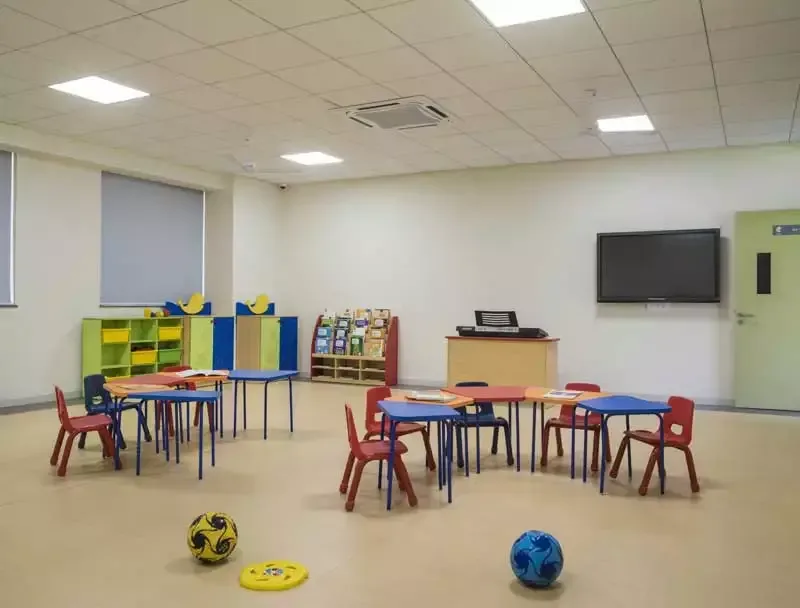
A Cambridge-pathway day school in the Baner-Balewadi belt, run by the long-established Bharati Vidyapeeth group. It opened in 2017 off Mitcon Road and carries the full Cambridge sequence from Primary through Checkpoint, IGCSE and AS and A Level, framed around the arts, sports and a broad ethos. Most intake is local rather than expatriate. It comes up among families weighing IGCSE options in the area as a credible pick, with its campus and facilities singled out as a step above some nearby Cambridge rivals, and it surfaces in the shortlists of returning-from-abroad families moving from an IB or AP background into IGCSE. As a relatively young campus inside a very large trust, the depth of its senior-school exam record is the open question. Annual tuition runs from roughly INR 100,000 at playgroup to 250,000 from Class 1 upward.
Billabong High International School Pune (Hadapsar)
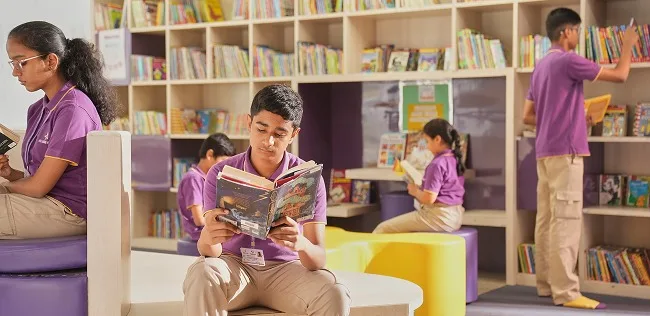
A Billabong-group day school in Amanora running CBSE alongside a Cambridge pathway. The Amanora campus serves Playschool through Grade 12 and offers two tracks, mainstream CBSE and Cambridge international, with a small class intake of around 24. It suits families inside Amanora Park Town and the wider Hadapsar belt who value a well-resourced campus over a long academic track record, though day-to-day it functions as a CBSE-first institution with Cambridge as the alternative stream. Local parents tend to file it as a solid-but-not-standout option: the campus and facilities draw praise, the academics land closer to average, and the fees are reckoned high for what comes back, with staff stability a recurring undercurrent. Fees run roughly INR 90,000 to 205,000.
Crimson Anisha Global School
A mid-market dual-board day school on NIBM Road in Mohammed Wadi, part of the Undri belt in south-east Pune, running CBSE and the full Cambridge pathway side by side. It dates to 2016 under the Anisha Education Society and takes children from nursery through Grade 12. Its defining feature is the dual track: parents pick the CBSE board or the Cambridge programme, the latter running Primary and Lower Secondary Checkpoint, IGCSE and AS and A Levels, both streams on one site. Recent CBSE pass rates sit in the low-to-mid 90s. It draws local Indian families more than the relocating-expat market. Annual tuition runs roughly INR 99,000 at lower primary to 165,000 at A Level, plus a one-time admission fee, placing it in Pune's mid-range.
Podar International School (Wakad)
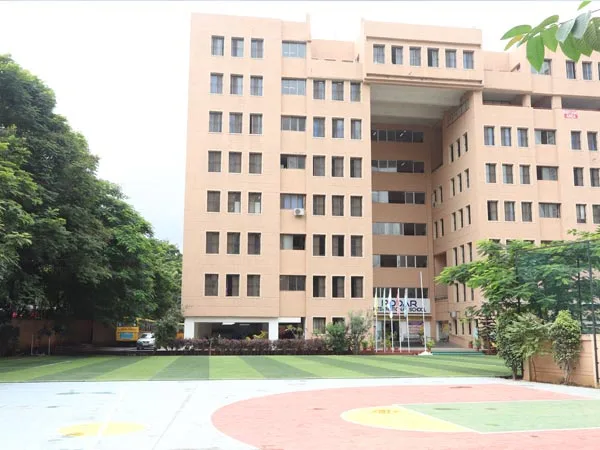
A domestic Pune day school in Tathawade that pairs CBSE with a parallel Cambridge stream, pitched at local families wanting an international pathway without expat-tier fees. Part of the Podar Education Network, it opened in 2018 and runs CBSE from nursery and a separate Cambridge stream covering Primary, Lower Secondary and IGCSE to Class 10, with no AS or A Level and no IB on site, so older students move elsewhere for senior years. Facilities are modern and the operation is sizeable. Feedback is mixed rather than glowing: one read is a solid, no-frills CBSE option that holds up next to nearby alternatives, while a competing strand warns of patchy teaching. Annual tuition sits roughly between INR 65,000 and 82,000. It suits Pimpri-Chinchwad families wanting structured CBSE with an IGCSE option close to home.
Oysters International School
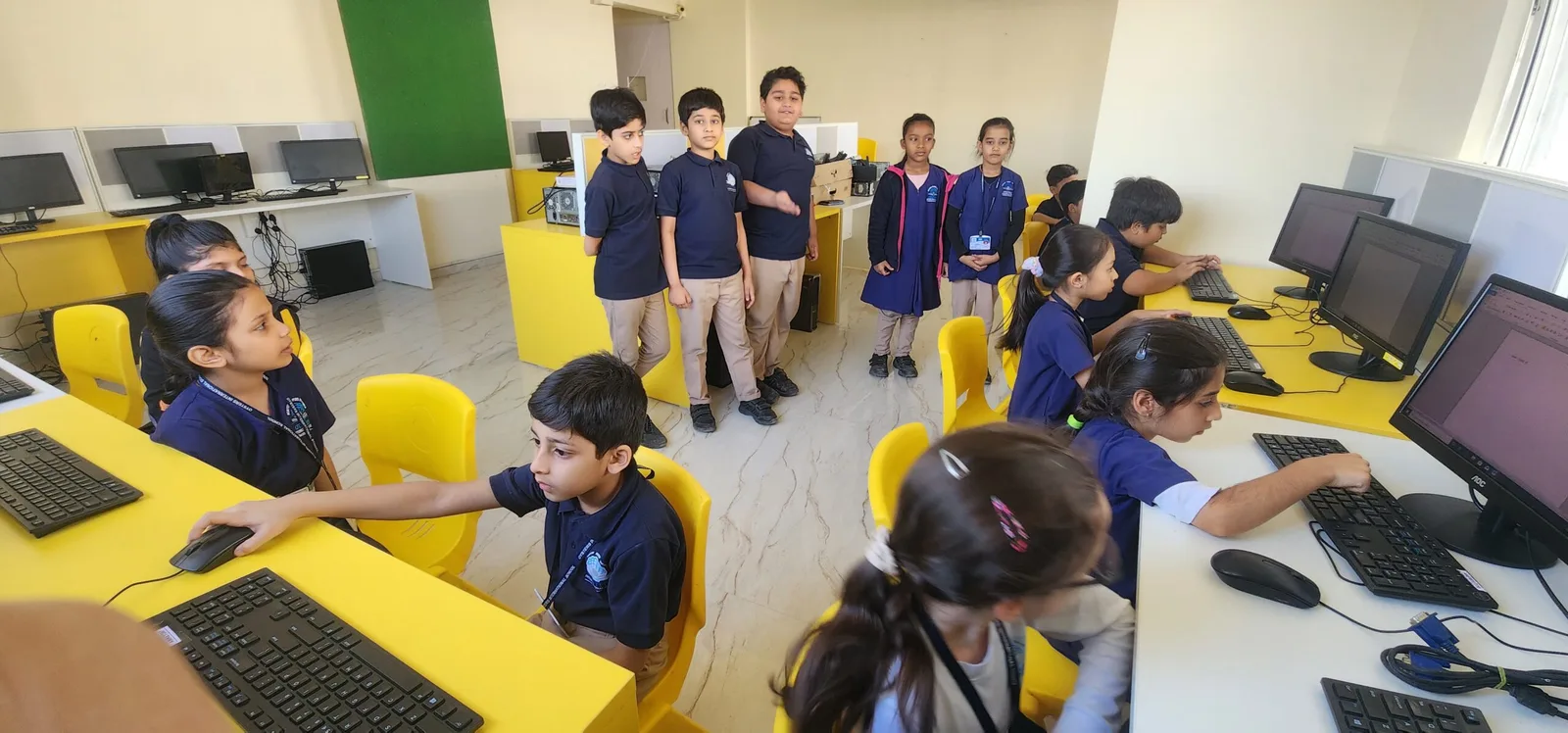
A mid-fee Cambridge day school in Mohammed Wadi that suits local families wanting an English-medium IGCSE pathway close to home rather than an expat-circuit school. It opened in 2011 under the Etihad Education Society and has grown from fifty pupils to more than six hundred, running the Cambridge pathway from Nursery through Grade 10 to IGCSE, with a broad activity programme, a swimming pool and robotics. Annual tuition sits between roughly INR 46,000 and 55,000 across the grades, low for a school carrying the international label and aimed squarely at the surrounding Kondhwa and NIBM Road catchment. There is no published sixth form, so families wanting A Levels or an IB Diploma look elsewhere after Grade 10. Families in the catchment describe a warm, small-feeling school where the teaching staff are the main draw, with the rougher edges showing up before a child is even enrolled.
Where to live
Pune spreads out from an old city core, and the choice of neighbourhood is largely a question of which IT corridor your work sits on and how that lines up with the school. International families concentrate in two arcs: the eastern social belt of Koregaon Park, Kalyani Nagar and Viman Nagar, near the airport, and the north-western Baner-Balewadi-Aundh corridor near the Hinjewadi IT park. The two are on opposite sides of the city, and cross-town traffic is heavy, so lining up home, school and job in the same arc matters more than absolute location.
Koregaon Park and Kalyani Nagar
Key schools: Finland International (Kalyani Nagar), Symbiosis (Viman Nagar, adjacent)
The most established expatriate choice and the city's most glamorous postcodes. Koregaon Park is leafy and low-rise, with tree-lined roads, bungalows, luxury apartments and Pune's best-known cafes and restaurants, and it draws senior professionals and expats who want privacy and a settled feel. Kalyani Nagar next door is a self-sufficient, family-friendly grid of modern housing, parks and malls, close to the airport and the eastern business districts. International communities have established roots in both, which makes connecting with other families easier.
Pros: The most cosmopolitan part of the city. Established expat community, good dining and imported groceries. Close to the airport and the eastern IT corridor. Finland International is in Kalyani Nagar; Symbiosis is a short hop to Viman Nagar.
Cons: Property prices are top-of-market, the highest in Pune. Stock skews to older bungalows and low-rise apartments rather than amenity-heavy towers. The western IT-park schools and jobs are a long cross-city drive.
Viman Nagar, Kharadi and Wagholi
Key schools: Symbiosis (Viman Nagar), Wellington College and Victorious Kidss (Kharadi), C P Goenka (Wagholi)
The eastern IT-and-airport belt, running from Viman Nagar by the airport out along the Nagar Road corridor through Kharadi to Wagholi. Kharadi anchors the eastern tech cluster around the EON IT Park and the World Trade Center, and has seen rapid premium-apartment development; Wagholi further out is newer and cheaper. This is where the eastern IT jobs concentrate, and where a dense cluster of international schools has gone up to serve them.
Pros: Closest to the eastern IT employment and the airport. Newer gated-community housing with amenities. Strong school cluster, including Wellington College, Victorious Kidss and Symbiosis. Purpose-built for working-parent commutes.
Cons: Nagar Road and the Kharadi approaches are traffic-heavy at peak. Daily-life texture is newer and thinner than Koregaon Park. The further out toward Wagholi, the longer the run back to the city core.
Baner, Balewadi and Aundh
Key schools: DLRC, Daffodil, Bharati Vidyapeeth, Universal Wisdom (Balewadi)
The north-western residential corridor, the fastest-growing part of the city, along the Mumbai-Bengaluru highway. Baner and Balewadi have become a tech-and-residential hotspot with shorter commutes to the Hinjewadi IT park than anywhere else in the arc; Aundh next door is an older, leafier, well-serviced neighbourhood. Modern apartment stock, malls and restaurants have followed the IT workforce here.
Pros: Best-placed for the western IT parks at Hinjewadi. Modern housing with amenities. A cluster of Cambridge and IB schools, including DLRC, Daffodil, Bharati Vidyapeeth and Universal Wisdom. Highway access toward Mumbai.
Cons: Further from the airport and the eastern social belt. The Hinjewadi commute itself, though shorter from here than elsewhere, is one of the city's worst at peak. Less of an established expat community than the east.
Hinjewadi and the western IT corridor
Key schools: Mahindra International (Hinjewadi), BLISS International (Hinjawadi)
The western IT corridor, the Rajiv Gandhi Infotech Park at Hinjewadi, a 2,800-acre cluster of over 800 IT companies. Living inside or right beside the park puts the western IT jobs and two strong schools, MIS and BLISS, within reach without the notorious commute in from elsewhere. Newer gated-community stock has gone up to serve the workforce.
Pros: Closest to the western IT employment. MIS, the city's strongest expat school, is here. Newer housing built for working families.
Cons: The Hinjewadi commute in and out at peak is among Pune's heaviest, so living here only makes sense if both work and school are inside the corridor. Daily-life amenities are thinner than the eastern social belt. Far from the airport.
Kondhwa, NIBM, Undri and Hadapsar
Key schools: RIMS (Kondhwa), Boston World (Undri), Oysters and Crimson Anisha (Mohammed Wadi), Billabong and Chatrabhuj Narsee (Hadapsar)
The south-eastern belt, running from the established NIBM and Kondhwa area down through Mohammed Wadi and Undri, with Hadapsar and the Magarpatta IT township to the north. This is a large, mostly local residential spread with its own dense cluster of schools, anchored by Magarpatta's offices. It suits families whose work sits at Magarpatta or Hadapsar, or who want a mid-market school close to home.
Pros: Dense school cluster across most budgets, from RIMS and Boston World to Oysters and Crimson Anisha. Close to the Magarpatta and Hadapsar IT offices. More affordable than the eastern social belt.
Cons: Less integrated with the expat community, which weights the east and north-west. Further from the airport and the western IT parks. Daily-life texture is more local-Indian than international.
Practical things to know
- Visas for families. Most international families in Pune are on Employment Visas sponsored by a local employer, or Project Visas. Spouses receive an X visa, and dependent children up to 18 can attend private or international schools on the same X visa. The Overseas Citizen of India (OCI) route only applies with Indian ancestry. The visa is tied to the sponsor and renewed with it.
- Pune is milder and drier than Mumbai. The city sits at altitude on the Deccan plateau, around 560 metres, roughly 150 kilometres south-east of Mumbai, which gives it a gentler climate than the coast. The monsoon runs June to September, peaking in July, rather than Mumbai's heavier and longer coastal deluge. Winters are dry and pleasant with cool nights, and the summer heat from April to early June is sharp but shorter than in many Indian metros. The milder weather is part of why families pick Pune over Mumbai for a posting.
- The IT geography splits east and west. Pune runs on two IT corridors on opposite sides of the city: Hinjewadi's Rajiv Gandhi Infotech Park in the west, and the eastern cluster from Kharadi's EON IT Park through Magarpatta and Hadapsar. Where you work decides which arc to live in, because crossing the city at peak is slow. The strongest expat school, MIS, sits in the western corridor; most of the established international neighbourhoods sit in the east, so western-corridor families often face the longer school run.
- "International" in a school name does not always mean an international curriculum. Several Pune schools carrying the label run CBSE alongside a Cambridge stream, or run CBSE as the real core with Cambridge as an alternative. Billabong, Crimson Anisha, Podar, Elpro and C P Goenka all pair a national board with an international one. Genuine full IB is concentrated at the top tier: MIS, Indus, MIT Vishwashanti Gurukul, Symbiosis and Victorious Kidss run the whole continuum. Verify IB or Cambridge authorisation on the official directories before assuming the badge.
- Fees stretch wider than any other Indian metro on this site. Annual tuition runs from roughly INR 50,000 at the budget Cambridge end to 20 lakh at Wellington College (about USD 600 to 23,400). The premium IB schools sit in the 4 to 14 lakh band, Wellington well above all of them. MIS bands its fees by nationality, charging expatriate families more. Expect an admission or registration fee at first entry, a refundable deposit, transport charges, and Cambridge or IB exam fees at the senior end. Some schools also levy sizeable one-time charges, which parents flag.
- Boarding is available, which is rare for an Indian metro. Indus at Bhukum and MIT Vishwashanti Gurukul at Loni Kalbhor both run full and weekday boarding alongside day places, on large out-of-city campuses. This is unusual: most international schools in Indian cities are day-only. Both sit well outside the centre, so the boarding option exists partly because the day commute from the city is long.
- Healthcare is strong and affordable. Pune has a well-developed private-hospital network, including the Ruby Hall, Jehangir and Sahyadri groups, with consultation fees and procedures at a fraction of Western equivalents. Private health insurance is recommended and cheap relative to US or European cover. For complex care, Mumbai's larger specialist hospitals are around three hours away by expressway.
- The airport is on the eastern edge and is being supplemented. Pune International Airport at Lohegaon sits north-east of the centre, near Viman Nagar, with direct regional and limited international flights; many international itineraries route through Mumbai. A new larger airport at Purandar, south-east of the city, is in development to expand capacity. From the eastern neighbourhoods the current airport is close; from the western IT corridor it is a long cross-city drive.
FAQs
How much do international schools in Pune cost? Annual tuition runs from roughly INR 50,000 at the budget Cambridge end to 20 lakh at Wellington College International (about USD 600 to 23,400), the widest spread of any Indian metro covered here. The premium full-IB schools, MIS, Indus, MIT Vishwashanti Gurukul, Symbiosis and Victorious Kidss, sit in the 2 to 14 lakh band depending on grade. Add an admission or registration fee, a refundable deposit, transport, and Cambridge or IB exam fees at the senior end. MIS bands its fees by nationality, charging expatriate families more.
Which Pune schools actually run a full IB programme? Mahindra International School (MIS), Indus International, MIT Vishwashanti Gurukul, Symbiosis International and Victorious Kidss Educares all run the full IB continuum from the primary years through the Diploma. St Mary's adds an IB Diploma stream on top of its ICSE and ISC track, and Wellington College finishes its British pathway on the IB Diploma. Several other schools pair Cambridge with CBSE rather than running IB.
Which is the best school for expat and diplomatic families? Mahindra International School (MIS) in Hinjewadi is the established choice. It is India's oldest full-IB-continuum school and its first CIS-accredited one, draws over half its cohort from expatriate families across around 32 nationalities, and runs the entire IB continuum. It is the closest Pune comes to a settled international-circuit school.
Which Pune neighbourhood is best for international families? It depends on which IT corridor your work sits on. Koregaon Park, Kalyani Nagar and Viman Nagar in the east are the established expat choice, near the airport and close to Symbiosis and Finland International. Families working the western Hinjewadi IT park lean to Baner, Balewadi and Aundh, near DLRC, Daffodil and Universal Wisdom, or live inside Hinjewadi near MIS. Kharadi and Wagholi in the east suit families wanting Wellington College or Victorious Kidss.
Is Pune better than Mumbai for families? Many relocating families prefer it. Pune is milder and drier, sitting at altitude with a gentler monsoon, costs less for a comparable lifestyle, and has a deeper full-IB school field than its smaller-metro reputation suggests. Mumbai offers more direct international flights and a larger expat community. The two are around 150 kilometres apart, roughly three hours by expressway.
Do any Pune international schools offer boarding? Yes, more than most Indian metros. Indus International at Bhukum and MIT Vishwashanti Gurukul at Loni Kalbhor both run full and weekday boarding alongside day places on large out-of-city campuses. Most other international schools in the city are day schools.
What is the climate like? Milder than Mumbai. Pune sits at around 560 metres on the Deccan plateau, with a June-to-September monsoon that peaks in July, dry and pleasant winters with cool nights, and a sharp but short summer from April into early June. The altitude and distance from the coast are why families often pick it over Mumbai.
Fees correct as of June 2026. Exchange rate: INR 83.5 = USD 1 (mid-2026). Every figure is sourced from school websites and corroborated against directory listings at the time of writing; admissions teams handle current figures and individual circumstances. If you spot something wrong, please tell us and we will update.